The Sin City Witches met June 25 at Shasta’s Sweet Treats and Coffee Shop in Henderson to discuss important principles of their faith.
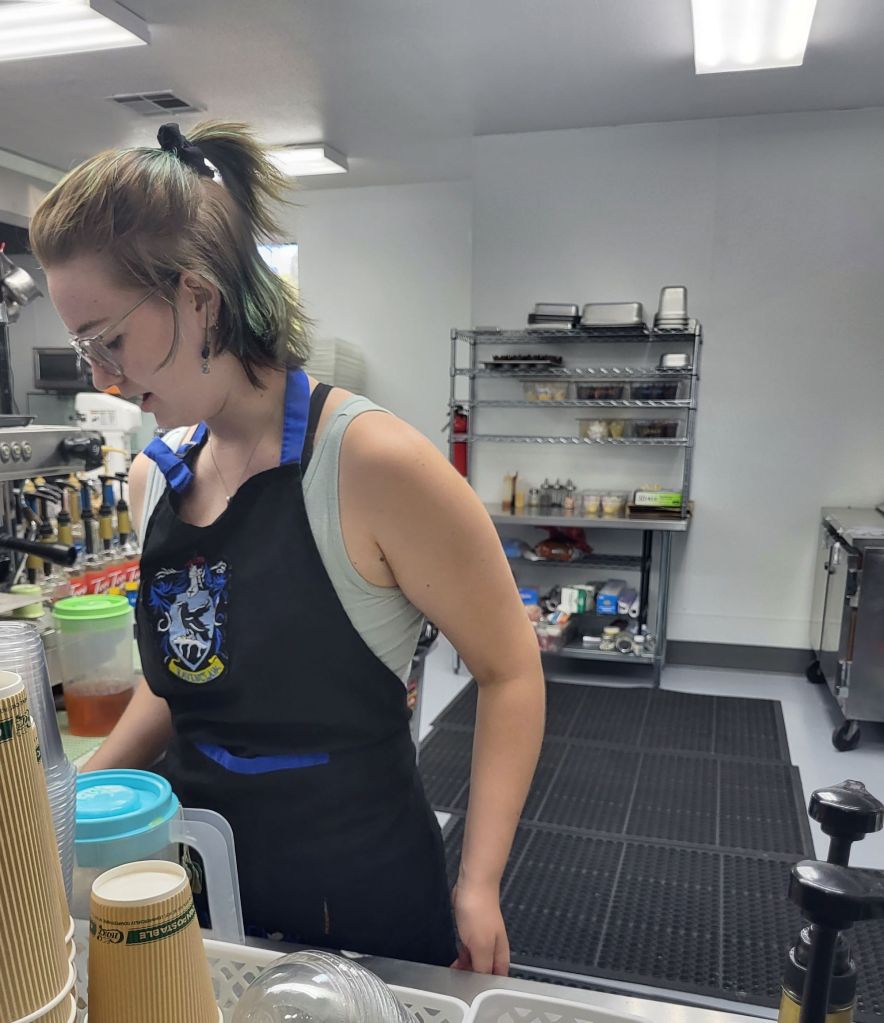
Shasta Ritter, owner of Shasta’s Sweet Treats and Coffee Shop in Henderson, Nevada, prepares an iced coffee. She said the witches are just like other customers: “They grab their coffee, sit down and chat.” Photo by Peter S. Levitt.
The four self-described witches—whose first names are Amanda, Lauren, Marion and Cindy—subscribe to a religion called Wicca. They explained that this religion is practiced through witchcraft; witchcraft, in turn, forms a spiritual connection with one’s personal god and goddess.
“Wicca is a religion and a lot of wiccans practice witchcraft,” Lauren said. “Pagan is a huge, catch-all term for anything that has anything to do with earth-based polytheism.”
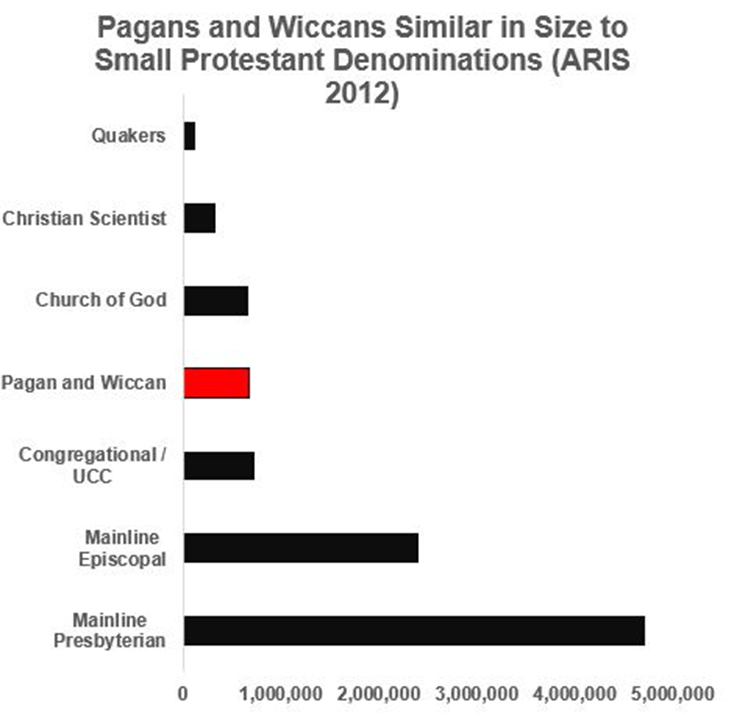
While it is still a numerical minority compared with Judaism, Christianity and Islam, Wicca is on the rise in the United States. The self-identified members of this religion, which was officially recognized in this country in a 1986 opinion by the 4th U.S. Circuit Court of Appeals, now outnumber Quaker, Christian Science and Church of God members, according to a 2012 survey.
Because Wicca has no central authority figure and maintains no strict hierarchy of control, its practice assumes varied and individualized forms, from chanting prayers to one’s gods to casting particular, situation-specific spells.
“When I do spell work, when I know I’ve done it right, I feel it,” said Cindy, tapping her heart. “I feel a connection. I feel a joy. I feel a happiness.”
Cindy feared that some witchcraft books micromanaged the practice of spell work. This, Cindy felt, removed the necessary spontaneity and spirituality from spell casting. She praised Thorn Mooney’s book, “The Witch’s Path,” however, for preserving and encouraging spontaneity.
Witches value spontaneity. While certain ritual aspects of witchcraft resemble the rituals performed in a synagogue, church or mosque, witchcraft springs from a different, personal place in each supplicant’s heart.
“I know my own heart and examine it regularly,” Marion said. “You find parts of yourself you don’t like and want to get rid of, but that’s the challenge. You have to accept those shadow-parts of yourself just as much as the parts you want to show everyone.”
A related cornerstone of witchcraft is self-examination. Witches must look deeply within themselves and, after reflection, walk their own paths.
“Witchcraft, as a whole, encourages you to look at yourself and see what kind of power you hold in the world,” Amanda said. “I’ve been practicing since I was 14, and I’ve grown so much more in the past 18 years than I would have had I not explored this particular faith and path.”
Lauren agrees. “We have these communal practices that are important but, at the end of the day, as a witch, you walk your own path.
“You are the one talking to your god and having these experiences. You are the one undergoing transformation. Witchcraft is intensely personal,” Lauren said.
Such transformations may reduce what the group says are outdated, anti-witch suspicions held by the general public.
“Witchcraft is not what the majority of society believes,” Cindy said. She smiled. “I’m out of the closet. Anybody who knows me, knows I’m a witch.”
Follow me on X at: @psl_write.
 Peter
Peter 
Leave a comment